Application
CCA conductor for cables and wires
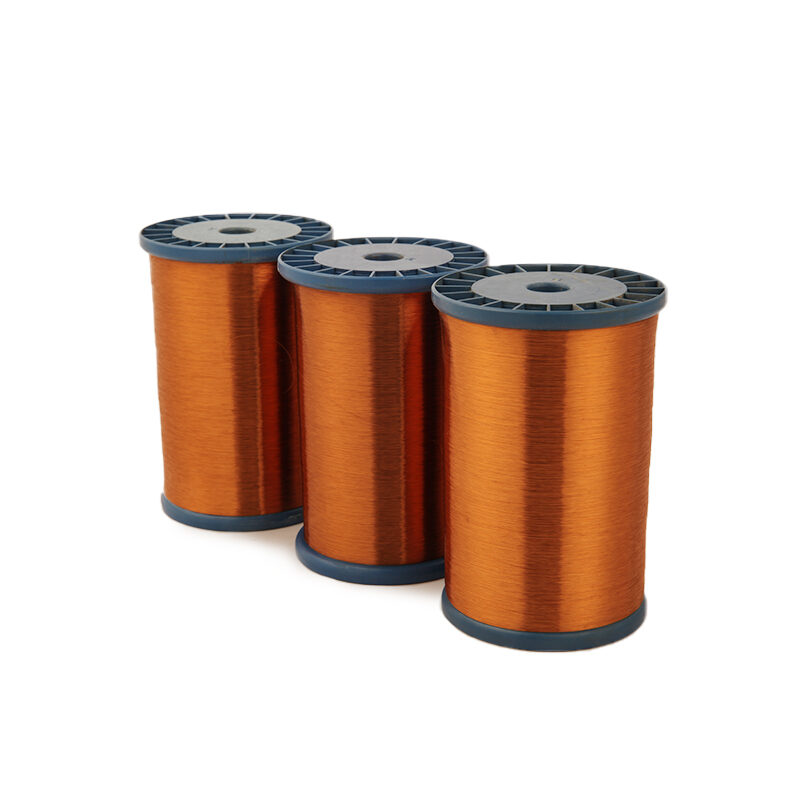
Copper-clad aluminium conductor gives cable makers a conductor that solders and crimps like copper, weighs about 40 % less and costs less per metre. We clad the bimetal ourselves, so the copper-to-aluminium interface is metallurgically bonded before drawing — not glued, not sleeved.
Why this wire
What the application actually needs.
- 10 / 15 / 20 % copper volumeChoose the copper layer that matches the flex and corrosion requirement of the cable.
- Round 0.10 – 8.00 mmSingle wire, or stranded to your construction.
- Flat conductorFor busbars, battery tabs and flat flexible cables.
- Consistent cladding ratioMeasured per batch and reported on the CoA.
Typical specification
| Typical conductor | CCA 10 / 15 / 20 % Cu · CCAM |
|---|---|
| Round diameter | 0.10 – 8.00 mm |
| Flat size | Thickness 0.20 – 3.00 mm · Width 1.00 – 12.00 mm |
| Conductivity | About 60–65 % IACS depending on copper ratio |
| Density | 3.32 – 3.63 g/cm³ |
| Standard | ASTM B566, GB/T 17937 |
Typical values. Final specification is confirmed on the quotation and the CoA.
Questions
Common questions from engineers.
Is CCA suitable for LAN and coaxial cables?
Yes — CCA is widely used as the inner conductor of coaxial cable and in LAN constructions where weight and cost matter. CCAM (copper clad aluminium magnesium) is used where higher strength is needed.
Can CCA be soldered?
Yes. The copper cladding is continuous, so standard soldering and crimping processes apply.
Enquiry
Cable conductor quotation.
Include the conductor, diameter or flat size, temperature class, quantity and destination port.